
Duct Tape Scavenger Hunt
Duct Tape Scavenger Hunt
An introduction to Classification with “Science All Around Us”
Campus Classification Walk
Objective
Students explore a designated area of the school campus and collect and document safe, nonliving natural objects. Back in the classroom, they observe the objects’ properties, develop classification rules, organize the collection, and explain the evidence behind their choices.
Materials
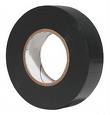
- Duct tape
- Scissors
- Collection trays, bags, or cups for teacher-approved bulky items
- Hand lenses (optional)
- Chart paper or a digital display
- Student science notebooks or classification charts
- Camera or tablet (optional)
Before You Begin
Create clear boundaries for the exploration area and review collection expectations. Students should collect only loose, nonliving items such as small leaves, grass clippings, pebbles, twigs, seeds, or fallen petals. Do not collect living organisms, disturb animal homes, pick plants, touch unknown substances, or collect sharp, dirty, or unsafe objects.
Procedure
- Make collection bracelets.
Wrap a short piece of duct tape loosely around each student’s wrist with the sticky side facing out. Tape should be comfortable and easy to remove. Younger students may need teacher assistance. - Explore and collect.
Students walk through the designated campus area and attach small, approved objects to their tape bracelets. Larger teacher-approved objects may be carried in a tray or bag. Encourage students to notice details using their senses of sight and touch; avoid smelling unknown objects. - Observe closely.
Back in the classroom, students examine their collections. Invite them to describe each item using scientific vocabulary, such as color, texture, size, shape, pattern, hardness, flexibility, weight, and material. - Develop classification systems.
As a class, students decide how to sort the objects. Begin with one shared category system, then invite partners or individuals to create and justify their own. Emphasize that scientists may classify the same objects in different useful ways, depending on the question they are investigating. - Create a class display.
Place collections, photographs, drawings, and class charts in a science bulletin board or “Science Corner.” Include student explanations of the category rules they used. - Reflect and share.
Ask students: “What patterns did you notice?” “Which objects could fit in more than one group?” and “What evidence supports your classification?” Photograph student work and share the day’s learning with families, following school photo-sharing guidelines.
Possible Classification Categories
Students may classify objects by:
- Natural or human-made
- Living, once living, or nonliving
- Plant material, rock/mineral, soil, or manufactured material
- Color, shape, size, or pattern
- Smooth or rough
- Shiny or dull
- Flexible or rigid
- Light or heavy
- Soft or hard
- Floating or sinking (buoyancy should be tested only with teacher-selected materials)
- Evidence of a plant, animal, weathering, or human activity
Written Application
Create a whole-class classification chart first. Model how to title categories, record observations, and explain why an object belongs in a group. Then, have students complete an individual chart, table, drawing, or labeled diagram.
For an added challenge, students can classify the same collection in two different ways and write a short explanation comparing the systems.
Can’t Go Outside?
Use safe classroom objects, school supplies, or photographs of campus items. Another option is to classify unopened or teacher-handled lunch items and packaging. Possible categories include color, brand, size, food group, packaging material, texture, sweet/sour/salty, plant-based/animal-based ingredients, or reusable/recyclable/disposable. Follow school allergy, food-handling, and dietary-privacy guidelines; students should not taste or share food as part of the activity.
NGSS Alignment
This activity is most directly aligned to 2-PS1-1, but it can support learning at several grade levels when paired with the indicated extension or student task.
| Grade | NGSS Performance Expectation | Connection to the Activity |
|---|---|---|
| Kindergarten | K-ESS3-1: Use a model to represent the relationship between the needs of different plants or animals and the places they live. | Students observe and document evidence of plants and animals in a campus habitat without disturbing organisms. |
| First Grade | 1-PS4-2: Make observations to construct an evidence-based account that objects can be seen only when illuminated. | Students compare how easily objects can be observed in sun, shade, or indoor light. |
| Second Grade | 2-PS1-1: Plan and conduct an investigation to describe and classify different kinds of materials by their observable properties. | Students observe, record, sort, and compare objects by properties such as color, texture, hardness, and flexibility. |
| Second Grade | 2-LS4-1: Make observations of plants and animals to compare the diversity of life in different habitats. | Students photograph, sketch, or note living things and evidence of life in different areas of the campus. |
| Third Grade | 3-LS4-2: Use evidence to construct an explanation for how variations in characteristics among individuals of the same species may provide advantages in surviving, finding mates, and reproducing. | Students compare variations in leaves, seeds, or other plant structures and discuss possible functions. |
| Fourth Grade | 4-LS1-1: Construct an argument that plants and animals have internal and external structures that function to support survival, growth, behavior, and reproduction. | Students use observations of external plant structures—such as bark, leaves, seeds, or thorns—to make evidence-based claims about function. |
| Fifth Grade | 5-PS1-3: Make observations and measurements to identify materials based on their properties. | Students create a more precise data table using measurable properties such as mass, length, magnetism, or water absorption. |
| Middle School | MS-LS2-1: Analyze and interpret data to provide evidence for the effects of resource availability on organisms and populations of organisms in an ecosystem. | Students compare evidence from sunny/shaded, landscaped/unlandscaped, or wet/dry campus areas and analyze how resources may affect organisms. |
| Middle School | MS-ESS2-1: Develop a model to describe the cycling of Earth’s materials and the flow of energy that drives this process. | Students use soil, rock fragments, leaf litter, and weathered materials to model processes such as weathering, decomposition, and movement of materials. |
Science and Engineering Practices: Planning and Carrying Out Investigations; Analyzing and Interpreting Data; Constructing Explanations; Engaging in Argument from Evidence; Obtaining, Evaluating, and Communicating Information.
Crosscutting Concepts: Patterns; Cause and Effect; Structure and Function; Systems and System Models.